Songs of High & Low Magic 29th June Atlantis Bookshop 6.30-8.30pm Songs from Cunning Folk & Burd Ellen

I’m a musician, a storyteller & a folklorist. I love magic. I don’t really know what it is but for me it’s something close to art. When I’m writing a song the music & words sometimes appear to come from another place & I’m the vessel which helps it along. When I’m telling a story I am crafting a shared place in the imagination we occupy and journey through.

Experiencing a great story, piece of literature or piece of music can transform us. Momentarily or permanently. If you are the kind of person who likes to think in such terms you could consider that to be magical.

Transformation from one state into another.

I go under the artist name, Cunning Folk, because I love the stories about the Cunning Men & Women of the villages & towns of Britain who could rustle up a herbal remedy, lift a hex, whisper a horse or animal, break out the witch bottle at midnight if needs be.

Low magic has power which we all still half remember when we refuse to cross on the stairs or say hullo to the magpie. There is a harmony of living when you carry a nutmeg around with you & only get your haircut on the wax of the moon. Old school mindfulness with sympathy for our ancestors.

High magic has power. The counting of angels on the head of a pin. The understanding of the Sigil. Jungian thought forms. Cockney visionaries. Enochian languages. Annie Besant, Madame Blatavsky, Crowley, Dee, Gardner, Graves, Valiente; exceptional lives led half in reality, half in dream. Poetic truths to augment our journey through life. Methods to augment our understanding & relationship with the worlds.

Whether magic is ‘true’ is moot to me. A magical state of mind invites opportunities to understand & relate to the world in a rich & nuanced manner. This is not for everyone, but it is open to all.

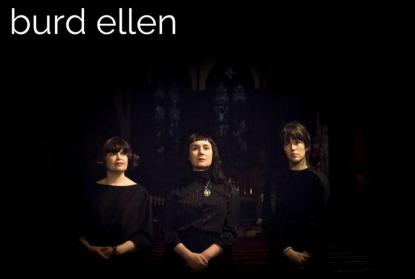
Magic has inspired me to create a set of songs which I am recording to release in the next year or so. It also gives me a great opportunity to visit my friends at Atlantis Bookshop on Saturday June 29th from 6.30pm for an evening of free performances of songs about Cunning Folk, songs about Annie Besant, Doctor Dee & musical adaptations of the songs of Aleister Crowley. There is also going to be songs from the amazing Burd Ellen, one of the finest folk singers in Scotland & a good friend.

If you want to listen to songs & stories of high & low magic in the bookshop where Crowley & Gerald Gardner & Steve Wilson shopped for free this is the event for you. Atlantis Bookshop is a stone’s throw from the British Museum & is ace. You are likely to buy a book or item from them if you enter!

cunningflower.jpgburdellen.jpg

Constant Companion: Robin Hood & The Pedlar

Cunning-Folk-Constant-Companion-Cover

I like old songs & this one is. It’s a Robin Hood ballad, typical of the type in that Robin Hood is bested in a friendly(ish) duel.

It appears in the Child collection with words dated to the mid 17th century. It appears in The Penguin Book Of English Folk Songs by Vaughan Williams & A.L.Lloyd with a tune collected by Lucy Broadwood from a Mr Burstow of Horsham in Sussex.

The tune is likely to have been sung to the 19th century broadside versions of the song.

A.L.Lloyd speculated that the pedlar, ‘Gamble Gold’ may in fact be Gamelyn & the story may derive from the 14th century Tale Of Gamelyn. In my opinion this is plausible.

When the song migrated into my repertoire the key signature moved from 3/4 into 4/4 & some of the melody changed. That’s folk for you.

This song is on my present recording, A Constant Companion, & you can hear more if you follow this link.

Musicity: The Biscuit Factory

https _cdn.evbuc.com_images_62718344_303164334552_1_original.20190522-163558

Musicity is an amazing architecture inspired sound art project. They commission artists to record site specific pieces & then geocache them so you can listen to them in situ.

I was asked to write a piece inspired by the Biscuit Factory in Bermondsey. It was the site of the Peak Freans factory & Bermondsey was known as Biscuit Town because of it. You could tell the day of the week by the smell coming out of the factory! The factory ran throughout the 20th century & when it closed it was repurposed to light industrial, offices, music studios, new media centres, food manufacture & distribution centres. You name it.

It would be interesting to see what past generations of workers would make of the current use for the factory space. Forever change.

I found some archive video recordings of the factory floor & filtered the audio to make it sound like a heart beat & built a musical piece about this industrial palimpsest. I then wrote a poem & a chorus which I recorded over the piece.

Faded films & grainy VHS
of a forgotten time almost within reach
transposed online for the world to see
which doesn’t necessarily unless it searches for it

Intangible moments we walk through every day
from one place to the next
transforming from one state into another
Not unlike biscuits travelling along a production line

Everything is change
Nothing stays the same
Old into the new

The train runs over the old tracks on the long viaduct
Above the factory where the machines are gone
but the buildings are not silent
I can’t help wondering what the people

who worked the lines generations ago would think
if they were transported to this place
right now.
We could cast a spell to find out

Everything is change
Nothing stays the same
Old into the new

I’m off to perform the piece tonight at The Underdog at 6pm. The address is in the link. It’s free & fully subscribed but if you come to the door & ask for Cunning Folk I’ll get you in


Constant Companion: The Cruel Mother

Cunning-Folk-Constant-Companion-Cover

N.B. This song has strong themes & may disturb. The clue is in the title. You may want to read the blog before listening.

Working with traditional folk music is a journey into cultural history, it’s an interaction with the past & how we relate to it.

I don’t claim to have any mission with my work with traditional music. I just like it.

If I’m being honest I sometimes perform traditional folk song to evoke some Arcadia, a merrie utopia, a curated memory of a rural life that never was & sometimes I perform it to try to uncover truths about life in the past.

This song is not a merrie one. It is one which is very difficult to place in a set, because of the subject matter. I have thought a lot about why I recorded it & I don’t know.

Maybe it’s unconscious patriarchy. I hope not.

Perhaps some part of me responds to the reductive morality within the song. I hope not.

It haunts me.

It is a beautiful ugly desperate song. It was sung widely across Scotland & England in the 19th century

Traditional folk songs are typically authorless. I wonder how this came about.

This recording is from my current album which you can hear if you follow this link.

Constant Companion: Constant Billy

Cunning-Folk-Constant-Companion-Cover

Growing up in Wimborne, Dorset, meant that I was subjected to a high dosage of morris dancing. I really like morris tunes. This is an arrangement of Constant Billy which was collected from William Kimber by Cecil Sharp in 1899! Cecil Sharp started collecting dance tunes a few years before he collected folk songs & was highly regarded by William Kimber, an Oxfordshire morris dancer & anglo-concertina player.

The recordings of Kimber playing & talking are a window into another time. Folk music can really take you to meet your heritage.

This recording is from my current album which you can hear if you follow this link.

Constant Companion: Death & The Lady

Cunning-Folk-Constant-Companion-Cover

Now we are in the merry month of May it seems appropriate that the song for the week is Death & The Lady.

This song is about an encounter with Death & a young woman on a May morning. The books call it ‘a prime example of the Danse Macabre tradition.’ In the middle ages, the Dance of Death & the dialogue between Death & his victim used to be enacted as astage morality. This ballad dates can be traced to a 17th century broadside ‘A Dialogue Between Death & The Lady’ which was widely distributed in England. It may have been a 16th century dialogue ballad, originally both sung & acted. It was collected widely in England, found once in Belfast & varients were found by Cecil Sharp on his Appalacian adventures.

I really like this song. It carries a chill with it.

This performance comes from my album, Constant Companion, which you can hear if you follow this link.


Constant Companion: Dick Turpin

Cunning-Folk-Constant-Companion-Cover

You may, or may not, know that I recorded an album of British traditional songs last year. I recorded the songs live, just myself, guitar & a bunch of microphones.

I’m a musician who comes from an amusical family: I sometimes feel like my connection to music was visited upon me by some remote entity.

I find music helps me to understand the world & find my place in it. Traditional music is fun because of the cultural history aspect of it. If you are a revivalist like myself you can get stuck into research & find music that may like to come off the page after a bit of time away from living ears. The songs often wander around the country too, which I love. An idea taking flight & striking out on it’s own.

Which brings me to this song, Dick Turpin, collected by George Gardiner in 1906 from Fareham in Hampshire about an 18th century highwayman. The real Dick Turpin was not the romantic figure of this song. He was more villain than hero. However the 1834 book Rookwood by W.H.Ainsworth transformed the 18th century criminal into a romantic hero for the 19th century. He gained his horse, Black Bess, & the famous ride to York on which this song is based.

This folk song most likely started as a music hall song in the mid 19th century before migrating into the tradition. This song was collected in 1907 from a 70 year old man by the name of Mr Snugg who was older than the song he sang.

I found the song in the pages of Marrow Bones, the EFDSS collection of Hammond & Gardiner manuscripts described by Martin Carthy as “great raw material” & arranged it for guitar & voice as you hear. It’s quite a tricky song to play but I find it good fun!

If you are interested you can hear more by following this link


Constant Companion: Matty Groves

Cunning-Folk-Constant-Companion-Cover

Among many other things I am a lover of the traditional songs & tunes of the British Isles. I released an album in December called Constant Companion which is a collection of some of my favourites. I’m doing a series of blogs about each of the songs on the album & this one is about Matty Groves.

I first heard Matty Groves on the Fairport Convention ‘Liege & Leaf’ album which is a classic English folk-rock album from 1969 which heralded the folk-rock movement of the  70s. It pretty much has everything an English folk song could have. Love, class, snobbery,  murder, grief & a tragic ending.

It’s an interesting one to place in a set as the ending is shocking & terrible but it still has  relevance today.

Matty Groves is a Border ballad probably originating in Northern England that describes an adulterous tryst between a man and a woman that is ended when the woman’s husband discovers and kills them. This song exists in many textual variants and has several variant names. The song dates to at least the 17th century, and under the title Little Musgrave and Lady Barnard is one of the Child Ballads.

If you want to hear more of my album, which was reviewed by Songlines & fRoots (but I’m not going to tell you what they said), you can follow this link


Constant Companion: Bruton Town

Cunning-Folk-Constant-Companion-Cover

I really enjoy working with traditional British repertoire. My current album, Constant Companion, is largely traditional songs.

I first heard Bruton Town on a Pentangle compilation about 30 years ago & loved the arrangement & the stark lyric. It’s a brutal tale of class, murder & grief. Ideal subject matter for an English folk song. I am particularly struck by the grief stricken sister dreaming the location of her dead lover.

Funnily enough it’s a very popular ballad not collected by Child. Bruton Town is in Somerset & they are proud of their association with the song. The song certainly turns up in early 20th century Somerset song collections. The story may be significantly older, from 14th century European tales which migrated over to England.

I originally came up with the arrangement on a banjo & then transferred the tuning over to guitar. CGCGCD is a fun tuning which suits modal playing.

I’m proud of my singing & playing on this song which was all one live take. The reviewer in fRoots commented that my guitar on this song was “distractingly percussive.” I disagree. But then again I would wouldn’t I.

If you want to listen to more, follow this link.


Constant Companion: Lovely Joan

Cunning-Folk-Constant-Companion-Cover

I really enjoy working with traditional British repertoire. My current album, Constant Companion, is largely traditional songs.

I first heard Lovely Joan in the bar at Cecil Sharp house sung by Alison Frosdick

Some of my repertoire comes from hearing songs at singarounds & events, some from albums or YouTube & some from song collector’s books. I looked in my ‘Penguin Book Of English Folk Songs’ & there it was. It’s performed by many folk so I thought I would have a go too.

Many traditional folk songs have an overt male gaze to them & as value systems have changed (for the better) so repertoires have changed too. Songs which would have been performed widely even 20 years ago need careful treatment. Not so much this one as it has a resourceful & decisive heroine who wins against an arrogant & predatory protagonist.

All the songs on this album were performed live and are single takes. It’s fun to fly by the seat of your pants sometimes!

If you want to hear more of the album this link will take you there…