Willie O’ Winsbury

Cunning-Folk-Constant-Companion-Cover

Over the past few months I have been putting up weekly blogs about songs from my most recent record ‘Constant Companion’. This is the last song on the album.

In 1969 the Irish folk band Sweeney’s Men recorded this song. Andy Irvine, who later went on to achieve great fame in Planxty, had found the words in the Child Ballad collection & had set it to music. He, very modestly, did not claim authorship of the melody but we all know he did it. What a genius.

The song & melody have migrated around the folk world ever since with countless great versions. I love that the tune is on the soundtrack of ‘The Wicker Man’ & turns up as a vocal melody on Fairport’s Liege & Lief.

It is a lovely song. I love that the heroine is called Janet. I also really like that the king is quite taken with handsome Willie!

If you like my music you can hear more here.

I am very excited about upcoming musical, magical & folkloric stuff which I will be letting you know about in future weekly blogs.

Music Folklore Magic


Soft Estate

Cunning-Folk-Constant-Companion-Cover

I drive around a lot. From gig to gig; storytelling & music, folklore talks & events I run. I like driving. It makes me feel like a grown up. I learnt to drive in my 30s. I was hit by a car as a teenager & did not want to be behind the wheel until I could fully trust myself to be safe.

I find myself on the M3 & the M27 quite a lot; heading to & from Dorset. To mix it up I sometimes take the A303 & then the Salisbury road all the way until I get to Cranborne Chase. Cranborne Chase may be one of the most beautiful parts of the world (full disclosure: I’m from East Dorset so I am biased!)

Several years ago I was driving back to London late at night coming through the Twyford Down section this song came to me fully formed. I had to turn off into the A31, stop at a layby & record it into my phone. I came up with the guitar arrangement when I got in.

Soft Estate is the name of the land owned by the Highways Agency, the verges & cuttings. When on the motorways I race by occasionally seeing a Buzzard, Kestrel or Red Kite hovering on macadam thermals. Sometimes I pass shrines to passed travellers who never made it off the road. Occasionally I stop at a motorway service station to take a break & to marvel at how expensive it is.

The melody of the song is in the Lydian mode, the nicest named mode. The melody is a dance, it’s a spell on the road.

Drive safe

If you want to hear more of my stuff follow this link

Poison In A Glass Of Wine

Cunning-Folk-Constant-Companion-Cover

Jealousy is a terrible thing & this dreadful ballad wrapped in a pretty tune is a testament to the evil in some of us. This song was originally a broadside ballad before taking on a life of it’s own, travelling all over the world. Versions have been collected all over England & from Scotland, Ireland, North America & Tristan da Cunha. I had to look up where Tristan da Cunha is: it’s the South Atlantic.

The moral of the song is that Jealousy kills.

This version was from a George Gardiner collection in 1908. He got it from a James Hiscock at Bartley in Hampshire.

Shepton Beachamp Wassail

sb.jpg

This is a lovely wassail from the West Country. There are two parts to the song & my performance above is the first. If you want to hear a great version from the British Library Sound Archive click on this link.  Wassailing is the ancient custom of singing and blessing the fruit trees to encourage a bountiful harvest. Sing to the apple trees, hit them with sticks, shoot at them even. I will be talking about wassailing at an event next Thursday called The Folklore Of Trees which you can find details about if you follow this link. Further ahead, on January 19th 2020 I will be leading a wassail in Gunnersbury Park. It’s a family event with stories, singing & a procession to wassail the apple trees. Follow this link for that event!

If you like my music you can hear more if you follow this link or check out my previous blogs which have lots of songs with the stories behind them.


Dirty Old Town

ewan

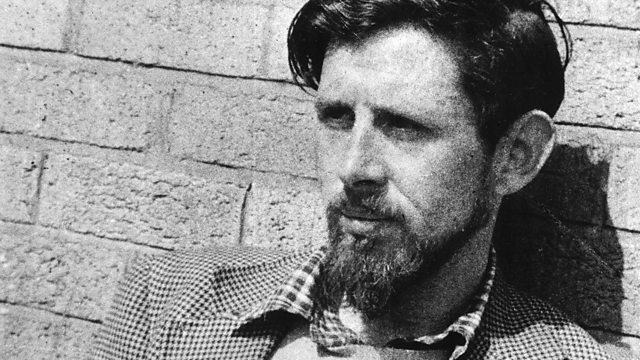
Ewan MacColl was a key figure in the second English folk-song revival of the 20th century. Like his peer & sometime friend A.L.Lloyd he was a committed Marxist & talented radio broadcaster. The Radio Plays he made with Peggy Seeger are quite amazing pieces & you can find them on YouTube & I recommend them. Ewan was a very talented songwriter & Dirty Old Town is one of his finest works. I love the Dubliner’s version. Luke Kelly was part of Ewan MacColl’s circle for a while & exported his songs into the Irish folk vernacular. Luke Kelly was one of the finest singers of any style in the 20th century. He had an ability to connect with material that is very rare.

There are many versions of this song about MacColl’s home town of Salford. Here is another.

If you want to hear more follow the link


The Astrologer

Cunning-Folk-Constant-Companion-Cover

This bawdy, but not too bawdy, song migrated into the tradition from early 19th century broadsides & chapbooks. It was collected by Henry Hammond in Poole, Dorset, from J Penny in October 1906.

In 2007 the Museum of Witchcraft commissioned a compilation of Songs of Witchcraft & Magic & The Astrologer appeared on it. The liner notes had an insight into the song:
“The deceptively simple song is an intriguing snapshot of the world of 19th century urban cunning folk. It exploits to the full the irony of the collision between the uncanny and the mundane. It gives the cunning man a certain glamour—a hint at contact with the Otherworld—even while it humorously makes the point that he specialises in telling young women’s fortunes, with all that implies.”

The song also reflects the fact that many young women were interested in divination. There are numerous records of folk-magic practices that enabled them to predict their romantic prospects.

All part & parcel of Cunning Folk

If you want to hear more follow the link


Ratcliffe Highway

Cunning-Folk-Constant-Companion-Cover

As you may know I made a collection of recordings of traditional British songs last year called Constant Companion.

This one is a little London ballad about a sailor who goes to a gin shop on the Ratcliffe Highway in Wapping & is somewhat taken aback by the price of drinks. It appears that London’s capacity to surprise the drinker with the cost of a round goes back a long way.

This is quite likely to have been a 19th century music hall song which migrated into the tradition, as is often the way. I found it in the trusty Penguin Book Of English Folk Songs edited by Ralph Vaughan Williams & A.L.Lloyd. It was collected by Vaughan Williams in 1905 from a Mrs Howard in King’s Lynn, Norfolk.

If you want to hear more of my stuff you can follow this link

The True Enlightenment

john-dee-site.jpg

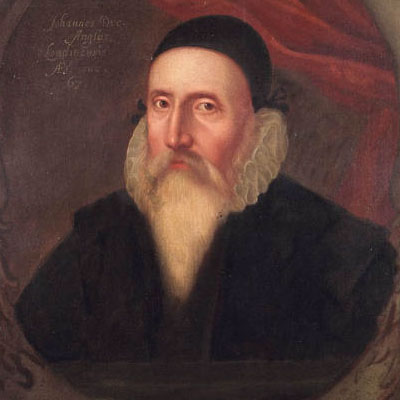
This fine fellow is Doctor John Dee. Here is a song about him.

He was a scientific advisor to Queen Elizabeth I. At that time the difference between science & high magic was often arbitrary. He cast a horoscope to choose the ideal date for her coronation then disappeared for 4 years to learn the secrets of the Cabala & to track down the mythical code book, Steganographia. This book which appeared to be a method of summoning spirits to transmit messages across vast distances was, in fact, a sophisticated code book which was used by Elizabethan English intelligence network. Dee used to sign his name 007.

Dee believed that angels could be seen in optical lenses & he employed a cunning man by the name of Edward Kelly to communicate with them in lengthy scrying sessions which Dee transcribed. Through these ‘Actions’ Dee & Kelly discovered the language of Angels, the Enochian language.

I could go on & on & on about Dee, the man who pioneered the concepts of Natural Magic, the man who saw magic as technology. I think he was brilliant.

The song is from my current album, Constant Companion, which you can hear more of if you click on this link.

The Wanton Seed

Cunning-Folk-Constant-Companion-Cover

This song can be found on 19th century broadsides by Bloomer & Evans of London. The song was collected by Henry Hammond in May 1906 from John Pomery of Bridport, West Dorset.

My favourite English Folk Revivalist, A.L.Lloyd  had a theory about this song. “Some erotic folk songs, thought crude by genteel collectors, embody ancient ritualistic notions of love. Just as, at seed-time in primitive communities, peasants would be expected to copulate in the furrows to give good example to the plants, so too songs were raised conveying the magical idea that all natural phenomena are interdependent, and that the closest unity exists between the germination of grain and the amorous encounters of men and women. As in this genial song to be heard in Dorset pubs earlier in the present century, sometimes called The Chiefest Grain.”

For a lifelong Marxist, Lloyd’s theories can veer into the Margaret Murray-esque mixed with a healthy dose of George Frazer-esque pagan place. I love it when he does this!

I rarely sing this song out, because context is key for me. If I am singing the song as part of a pagan event I’m good. In a gig or singaround environment I feel the song can be an imposition on the audience. I would prefer this to be a song performed in a context of liberation & harmony with the earth, rather than as throwaway dirt.

This song is part of my current release, “Constant Companion”, which you can hear more of if you click on this link.

Let’s Go To Atlantis & Make Soul Cakes

fresco-1024x567.jpg

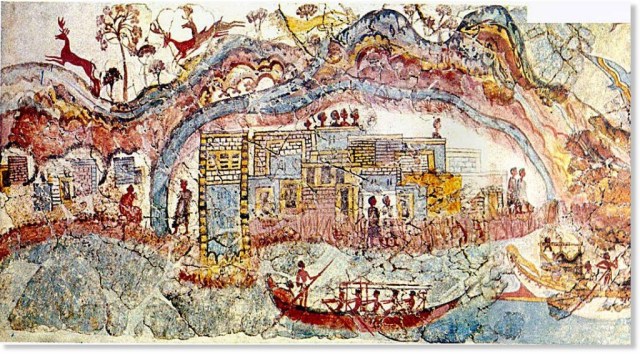
By that I don’t mean the mythical island, possibly shown here, I mean the shop in Bloomsbury where myself & Burd Ellen are performing on Saturday from 6.30-8.30pm for love. It’s a free event & will be magical.

IMG_6147.jpg

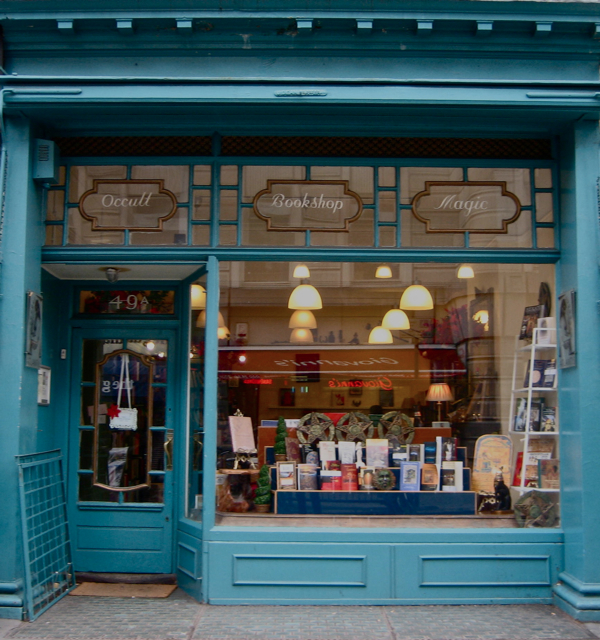
Atlantis Bookshop is a stone’s throw from the British Museum & is a treasure trove of folkloric books & items, magical stuff & more. If I need to brush up on my Enochian this is where I head. Likewise if I need any advice on Gardner or Valiente it’s to Geraldine & Bali I turn. Crowley used to frequent this shop. I will be singing some of his poems set to music.

Cunning-Folk-Constant-Companion-Cover

I will also be singing this little tune. It’s an old song from the Midlands that children would sing as they collected ingredients for Soul Cakes.

My favourite English Folk Revivalist A.L.Lloyd wrote “The end of October and start of November is the time of Hallowe’en, All Saints and All Souls, a time once thought full of magic, when the dead temporarily returned to the world of the living and roamed around the villages on the misty evenings. Till recently in parts of the Midlands and the Northwest, children went from door to door begging for soulcakes. [These] were food for the momentarily-returning dead, so that they would not feel rejected and thus be made angry. The little trichordal tune based simply on a scale of three adjacent notes within a minor third, is one of the most primitive we have.”

Old magic.

If you like that tune; it’s  from my most recent recording “Constant Companion” & you can hear more if you click on this link