Risk assessments, timings, letters to local businesses, press releases, confirmation of artists, PA booked, Marquee booked, flyers, posters, marshals. We seem to be in good shape for the best free folk festival in London on September 8th…. oh & Cunning Folk will be playing in the evening!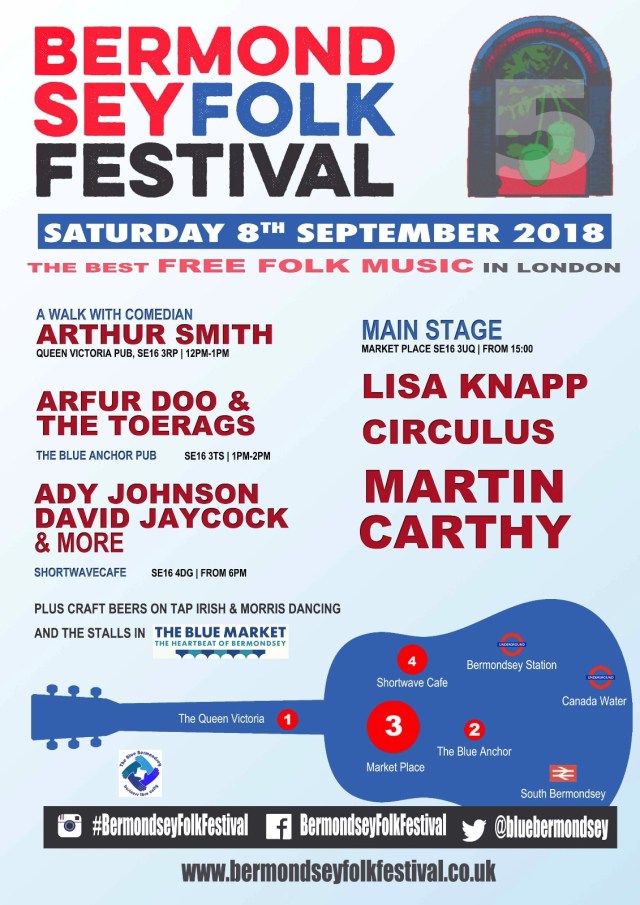
Author: George Hoyle
Cross Bones Beer


I have had links with the Cross Bones graveyard for over a decade. I perform several times a year either in the garden or at the monthly ritual for the outcast dead. It’s a special place, a potters field, a pauper’s burial ground, a place where the Winchester Geese were laid to rest.
The lovely garden has plenty of hops plants in it so I spent an hour or two choosing the strongest shoots to train on the twine & thinning out the rest. To say that hops is vigorous is an understatement: I intended to come to the garden last week but had to postpone & in the space of 6 days the Dwarf Fuggles went rampant. Heavy pruning was needed. I took cuttings for my garden.
I’ll be returning regularly to prune & care for the hops with the aim of using the hops to brew a Cross Bones Beer!
Bermondsey Folk Club: 3 Months In
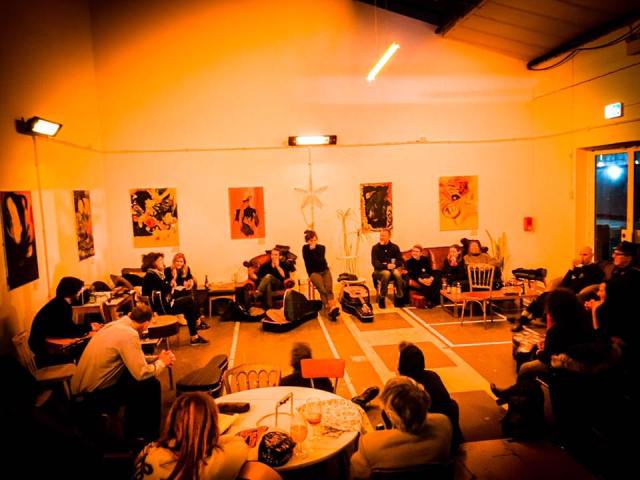
I have been running the Bermondsey Folk Club for 3 months now & it’s growing into a lovely community. The first 3 events have been monthly singarounds which have been well attended even on the very cold February date. On that occasion some sensible souls brought a duvet with them, which is sensible as the space we meet in, Shortwave Cafe (on Clements Road, around the corner from Bermondsey tube), is not the warmest. However the acoustic is excellent, lending itself to unamplified music.
I am adding another regular night. This will be a featured artist night & will be on the third Saturday of each month. This night will have plenty of floor spots & also a longer performance from an established folk act. This will be a lot of fun.
The first club night is Saturday 21 April from 6pm & the featured artists are Ruth & Rupert, who are some of South London’s finest! Follow this link for the facebook event.
Accompanying their close harmonies with delicate clawhammer banjo and guitar lines, Ruth and Rupert play folk songs and tunes from the British Isles and America. Their deep-reaching repertoire includes both traditional and original songs.
Ruth and Rupert run well-loved south London folk club TOOTING FOLK which has been going a good 5 years now, and also perform as The Bara Bara Band.
1952 Vincent Black Lightning
Richard Thompson released this amazing tune in 1991, as an album track on “Rumor & Sigh”. It’s about Red Molly & a rake by the name of James who charms her with his fine motorbike.
I came to it after listening to this live version which I may prefer to the album version. There are loads of versions to listen to.
I love this Sean Rowe version. He looks like he might be James.
Bluegrass hero Del McCoury takes it to Knoxville. I like it but I would have loved to hear Del sing it on guitar without band. This song may come out better a little more exposed.
Dick Gauchan’s version really connects for me.
This is a bootleg of Bob Dylan & band covering it. You can hear the audience not knowing the song but getting into it. I would love to hear a studio recording of this.
This Robert Earl Keen version is also worth listening to. You can start to hear this song becoming a bluegrass standard.
Willy O’Winsbury
The first recorded version of Willie O’Winsbury was by Andy Irvine in 1968 on the Sweeney’s Men eponymous album. According to Andy; “This is Child 100. I collected the words from different versions and as the story goes, on looking up the tune, I lighted on the tune to number 101. I’m not sure if this is true but it’s a good story”. It is rumoured that Andy wrote the tune himself. I wouldn’t be surprised as the man is a genius.
Fairport Convention recorded “Farewell, Farewell” in 1969 ,with lyrics written by Richard Thompson, to the tune used on the Sweeney’s Men version.
John Renbourn recorded a version in 1971 on his album Faro Annie.
Anne Briggs recorded a version for her eponymous album in 1971 too. I work part time as a drayman & once listened to this version 6 times in succession & then had to park up to wipe the tears from my eyes.
Pentangle recorded a version in 1972 on their Solomon’s Seal album
Paul Giovanni wrote an instrumental version for the procession scene of The Wicker Man.
This Richard Thompson live performance from 1989 is brilliant.
The song is Child Ballad 100 It is a traditional Scottish ballad that dates from at least 1775, and is known under a number of different names, including Lord Thomas of Winesberry.
There are numerous recorded versions.
Dirty Old Town
Dirty Old Town was written in 1949 by Ewan MacColl & is about Salford, Lancashire, where he grew up. It was originally written as an interlude to cover a set change in a play he had written, but gained a life of it’s own as a folk standard. The first recorded version of the song was made by Ewan in 1952. This is the 1956 version made by Ewan with Peggy Seeger, Alan Lomax & the Ramblers.
The song is probably most associated with The Dubliners, who recorded a version in 1968. This is a great video of them performing it in 1976 in Finland.
The Pogues have often performed it too. One of the first gigs I went to was to see The Pogues on their Rum Sodomy & Lash tour. I was 16 & it was one of the best gigs of my life.
Dirty Old Town is such a wonderful song & it travels well.
Constant Billy
Last spring my friend Michael, who is a regular at the South East London Folklore Society, sold me a compact disc of recordings of William Kimber. William Kimber was an Oxfordshire Morris Dance & Anglo Concertina player who was a key figure in the 20th century Morris revival. Kimber first met Cecil Sharp in 1899 & they had a long association & friendship.
The CD was of old interviews with Kimber & archive recordings of his playing. I grew up in Wimborne, East Dorset, which has an annual folk & morris festival which was a calendar event when I was growing up. The tune Constant Billy leapt out at me. The song collector Kidson identified this tune as a late 17th century song popular with morris sides & very much a standard.
There are very similar Highland & Irish tunes from the 18th century so it is hard to give a definitive source. I like it very much & am putting an arrangement in my repertoire.
How To Get To Play At Bermondsey Folk Festival 2018
Bermondsey Folk Festival 2018 will be on Saturday 8th September 2018 & is now into it’s 4th year. From small beginnings it is starting to flourish as a calendar event in the London Folk Scene. The headline acts for the day have been booked: Martin Carthy, Lisa Knapp, Circulus, Arfur Doo & The Toerags.
Now is the time to start programming acts who would like to have an opportunity to play on the day. This is why I am starting the Bermondsey Folk Club. Over the course of this year we will be having monthly singarounds at Shortwave Cafe, a lovely licensed venue in Bermondsey. The first singaround is on Sunday January 28th from 7-10pm & all comers will be welcome to play. The singarounds will be on the last Sunday of the month from then on & will be free, though I will pass a hat around with a suggested £3/1.50 concessions for organising & running the session. Regular attendees who want to perform in September will be scheduled a spot.
I will also be starting featured artist club nights from March with floor spots & support slots available. So even more opportunities to play.
I’m a folk musician myself & I get my gigs from people who have met me & I have a relationship with. In my opinion the best way to get booked is to get out & physically meet people & play in front of them. So if you want to come & play in Bermondsey you can: come down to the singaround & say hello!
The Wanton Seed
This is a recording of A L Lloyd performing “The Wanton Seed”
I first encountered this song from the 2015 edition of “The Wanton Seed” book, a collection of English Folk Songs From the Hammond & Gardiner Manuscripts. This excellent collection has been a great source for helping me to build a repertoire & having grown up in East Dorset it was fun seeing the many familiar Hampshire & Dorset locations these songs were collected from. This song’s euphemism is obvious.
This is what A.L.Lloyd had to say about the song; “Some erotic folk songs, thought crude by genteel collectors, embody ancient ritualistic notions of love. Just as, at seed-time in primitive communities, peasants would be expected to copulate in the furrows to give good example to the plants, so too songs were raised conveying the magical idea that all natural phenomena are interdependent, and that the closest unity exists between the germination of grain and the amorous encounters of men and women. As in this genial song to be heard in Dorset pubs earlier in the present century, sometimes called The Chiefest Grain.”
I love this Nic Jones version. What a player!
A New Year, A New Album

It’s 2018 & I’m recording a new album on Dharma Records. This one is going to be a collection of traditional British folk songs arranged for voice & solo acoustic guitar. I’ve spent the last few years building up a repertoire & in the upcoming weeks & months I will be blogging about the process of finding & arranging songs, the history of the ones I have chosen & about the composition of the guitar arrangements.
For the first time in many years I have a producer, which is something I am very happy about. A producer manages the project & exercises his or her taste & judgement on arrangements. The producer has control over how the record will sound. There’s a lot to this job & I’m glad to be able to concentrate on the performance alone.
A producer called Ian Carter has the reins of this project. He is best known in UK folk for his work producing & performing in an outstanding band called Stick In The Wheel & he has many other performance, writing, engineering & production credits to his name. I feel lucky.
So for the next month or so I am intensively rehearsing & we aim to record next month. More news soon…
 Cunning Folk