Here

Here I am strolling on Martin Down, enjoying the song of the Yellowhammers. Martin Down is on Cranborne Chase & is one of my favourite places to go. It’s got Saxon boundary ditches, ancient tumuli & great wildlife.

Here I am on a heath on the Arne Peninsula near the Isle of Purbeck. It’s quiet here: not as quiet as Bodmin Moor when the air is still but quiet enough to spend a while in peace.

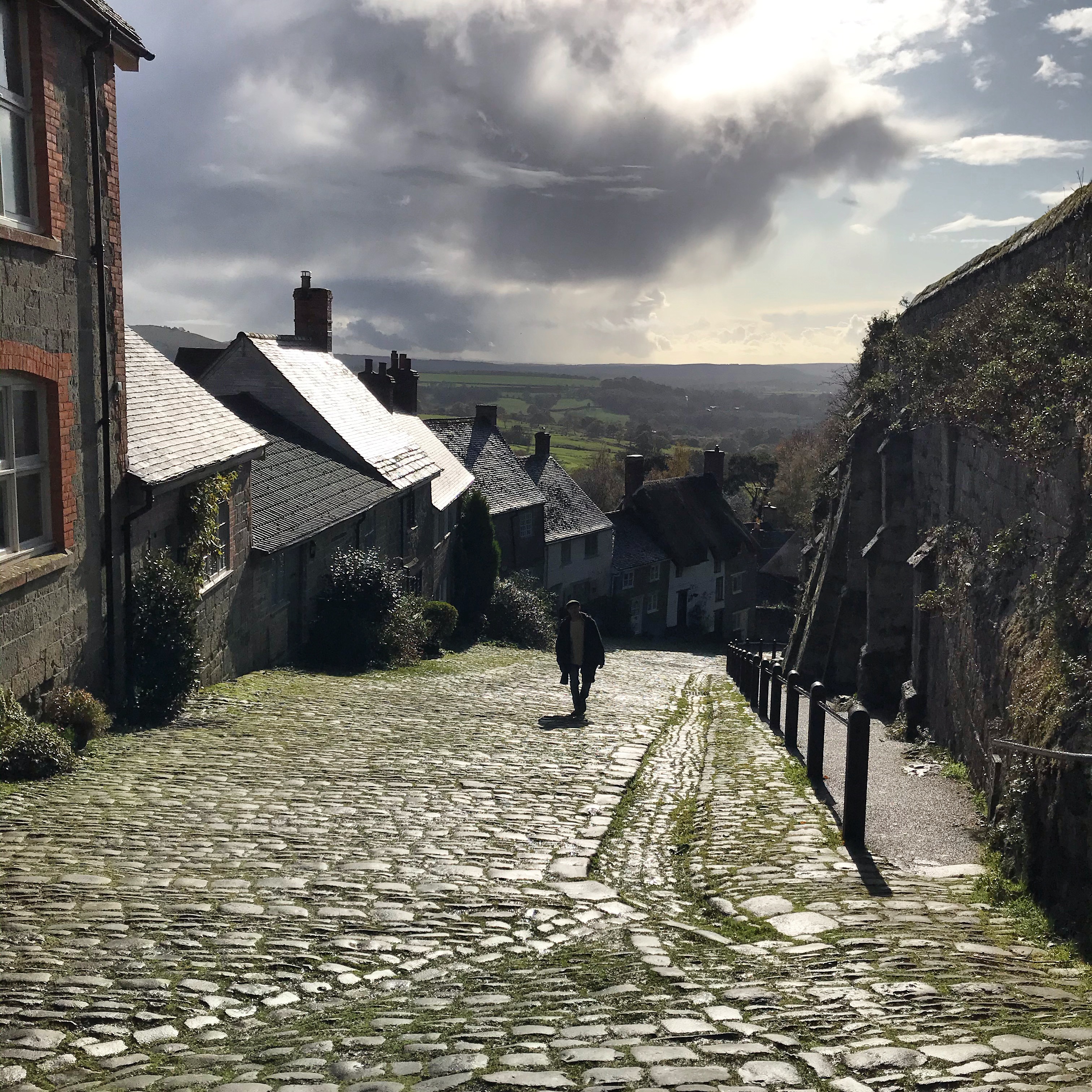
Here I am climbing Gold Hill in Shaftsbury. I love Wessex. I enjoy being outdoors in old places & drifting through histories.

I enjoy the indoors too.

Here I am with my friends Olly & Rocco performing an improvised soundtrack to the 1928 Swedish classic silent movie Haxan. That’s a typical Halloween evening for me. The picture was taken by Claire Donovan & captures the vibe perfectly. I read the Mackay translation of Malleus Maleficum several years back & this film is in keeping with the source persecution. I am currently arranging to perform more live soundtracks of silent films. Murnau, Lester & Bunuel are in the crosshairs with more pending.

I’m currently cooking up all manner of fun events, inside & outside & have made some new recordings which will be released in 2020. If you like Music Folklore & Magic I think you will enjoy…

How I prepare a story to tell.

IMG_3428

I’m quite delighted that the event that I am doing next Wednesday with my good friend Chris Roberts, More Fright By Rail,  was in the Evening Standard what’s on column yesterday. It’s nearly sold out but if you hurry you can book from this page link.

I make my living by singing songs & playing my guitar & also by storytelling.

Next Wednesday I will be telling the Dickens classic tale ‘The Signalman’
vlcsnap-00405

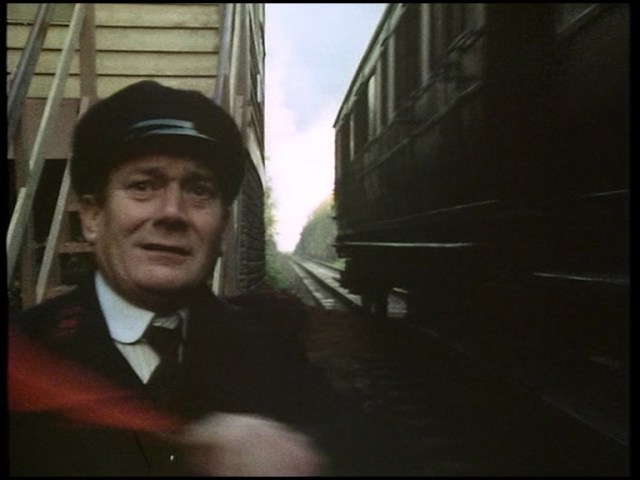
I first became aware of the story through the classic 1976 BBC adaptation starring Denholm Elliott. I thoroughly recommend the BBC ‘Ghost Story for Christmas’ series; mostly M.R. James adaptations but with a few exceptions like this chilling tale.

The Dickens short story was published in 1876 & comes in at about 15 pages. It is brilliant. If you like ghost stories, treat yourself.

The process of taking a piece of literature & bringing into the more informal craft of storytelling has been an interesting one. I started in June by reading the tale 3 times a week for a month to get a feel for the story. I also read around the subject. The BFI DVD release of Signalman had a great essay by Matthew Sweet which gives excellent background to the tale. It gives a context to Dickens’ work at the time & some sensitive analysis. Having a context to tell into, a deeper understanding of the world of the story gives me confidence when working with material like this.

The story of the Signalman has a lot of dialogue in it. Over July & August, in between jobs, I transcribed the dialogue from the tale & then in September I filleted out the key exchanges to work with & the nailed the key plot points. I also had a good idea of the underlying implicit feelings & meanings I wanted to communicate.

When preparing stories to tell I have a short attention span & can only work in bursts of an hour or so per day before I lose momentum so starting well in advance of the date is key.

In October I started rehearsing; speaking into a recorder. I need some kind of audience to work to even if it is just a microphone. The first few performances are rubbish, but that’s really useful. I like mistakes; if you can find them all out in rehearsal  you won’t make them in performance. Once all the iterations of failure have been identified I stand a good chance of telling a good tale.

Now with a few days to go I have found a few trusted folk to tell the tale to. The notes I get back are really useful.

I’m really looking forward to telling The Signalman next week. Working with such great subject matter makes me realize afresh quite how brilliant Dickens was & quite how fresh his work still is. Go read him.


Willie O’ Winsbury

Cunning-Folk-Constant-Companion-Cover

Over the past few months I have been putting up weekly blogs about songs from my most recent record ‘Constant Companion’. This is the last song on the album.

In 1969 the Irish folk band Sweeney’s Men recorded this song. Andy Irvine, who later went on to achieve great fame in Planxty, had found the words in the Child Ballad collection & had set it to music. He, very modestly, did not claim authorship of the melody but we all know he did it. What a genius.

The song & melody have migrated around the folk world ever since with countless great versions. I love that the tune is on the soundtrack of ‘The Wicker Man’ & turns up as a vocal melody on Fairport’s Liege & Lief.

It is a lovely song. I love that the heroine is called Janet. I also really like that the king is quite taken with handsome Willie!

If you like my music you can hear more here.

I am very excited about upcoming musical, magical & folkloric stuff which I will be letting you know about in future weekly blogs.

Music Folklore Magic


Soft Estate

Cunning-Folk-Constant-Companion-Cover

I drive around a lot. From gig to gig; storytelling & music, folklore talks & events I run. I like driving. It makes me feel like a grown up. I learnt to drive in my 30s. I was hit by a car as a teenager & did not want to be behind the wheel until I could fully trust myself to be safe.

I find myself on the M3 & the M27 quite a lot; heading to & from Dorset. To mix it up I sometimes take the A303 & then the Salisbury road all the way until I get to Cranborne Chase. Cranborne Chase may be one of the most beautiful parts of the world (full disclosure: I’m from East Dorset so I am biased!)

Several years ago I was driving back to London late at night coming through the Twyford Down section this song came to me fully formed. I had to turn off into the A31, stop at a layby & record it into my phone. I came up with the guitar arrangement when I got in.

Soft Estate is the name of the land owned by the Highways Agency, the verges & cuttings. When on the motorways I race by occasionally seeing a Buzzard, Kestrel or Red Kite hovering on macadam thermals. Sometimes I pass shrines to passed travellers who never made it off the road. Occasionally I stop at a motorway service station to take a break & to marvel at how expensive it is.

The melody of the song is in the Lydian mode, the nicest named mode. The melody is a dance, it’s a spell on the road.

Drive safe

If you want to hear more of my stuff follow this link

Poison In A Glass Of Wine

Cunning-Folk-Constant-Companion-Cover

Jealousy is a terrible thing & this dreadful ballad wrapped in a pretty tune is a testament to the evil in some of us. This song was originally a broadside ballad before taking on a life of it’s own, travelling all over the world. Versions have been collected all over England & from Scotland, Ireland, North America & Tristan da Cunha. I had to look up where Tristan da Cunha is: it’s the South Atlantic.

The moral of the song is that Jealousy kills.

This version was from a George Gardiner collection in 1908. He got it from a James Hiscock at Bartley in Hampshire.

Shepton Beachamp Wassail

sb.jpg

This is a lovely wassail from the West Country. There are two parts to the song & my performance above is the first. If you want to hear a great version from the British Library Sound Archive click on this link.  Wassailing is the ancient custom of singing and blessing the fruit trees to encourage a bountiful harvest. Sing to the apple trees, hit them with sticks, shoot at them even. I will be talking about wassailing at an event next Thursday called The Folklore Of Trees which you can find details about if you follow this link. Further ahead, on January 19th 2020 I will be leading a wassail in Gunnersbury Park. It’s a family event with stories, singing & a procession to wassail the apple trees. Follow this link for that event!

If you like my music you can hear more if you follow this link or check out my previous blogs which have lots of songs with the stories behind them.


Dirty Old Town

ewan

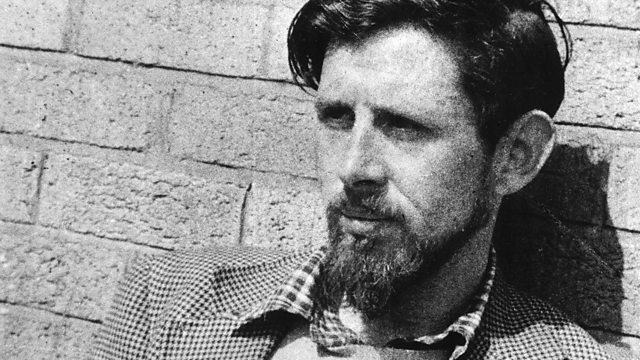
Ewan MacColl was a key figure in the second English folk-song revival of the 20th century. Like his peer & sometime friend A.L.Lloyd he was a committed Marxist & talented radio broadcaster. The Radio Plays he made with Peggy Seeger are quite amazing pieces & you can find them on YouTube & I recommend them. Ewan was a very talented songwriter & Dirty Old Town is one of his finest works. I love the Dubliner’s version. Luke Kelly was part of Ewan MacColl’s circle for a while & exported his songs into the Irish folk vernacular. Luke Kelly was one of the finest singers of any style in the 20th century. He had an ability to connect with material that is very rare.

There are many versions of this song about MacColl’s home town of Salford. Here is another.

If you want to hear more follow the link


The Astrologer

Cunning-Folk-Constant-Companion-Cover

This bawdy, but not too bawdy, song migrated into the tradition from early 19th century broadsides & chapbooks. It was collected by Henry Hammond in Poole, Dorset, from J Penny in October 1906.

In 2007 the Museum of Witchcraft commissioned a compilation of Songs of Witchcraft & Magic & The Astrologer appeared on it. The liner notes had an insight into the song:
“The deceptively simple song is an intriguing snapshot of the world of 19th century urban cunning folk. It exploits to the full the irony of the collision between the uncanny and the mundane. It gives the cunning man a certain glamour—a hint at contact with the Otherworld—even while it humorously makes the point that he specialises in telling young women’s fortunes, with all that implies.”

The song also reflects the fact that many young women were interested in divination. There are numerous records of folk-magic practices that enabled them to predict their romantic prospects.

All part & parcel of Cunning Folk

If you want to hear more follow the link


Ratcliffe Highway

Cunning-Folk-Constant-Companion-Cover

As you may know I made a collection of recordings of traditional British songs last year called Constant Companion.

This one is a little London ballad about a sailor who goes to a gin shop on the Ratcliffe Highway in Wapping & is somewhat taken aback by the price of drinks. It appears that London’s capacity to surprise the drinker with the cost of a round goes back a long way.

This is quite likely to have been a 19th century music hall song which migrated into the tradition, as is often the way. I found it in the trusty Penguin Book Of English Folk Songs edited by Ralph Vaughan Williams & A.L.Lloyd. It was collected by Vaughan Williams in 1905 from a Mrs Howard in King’s Lynn, Norfolk.

If you want to hear more of my stuff you can follow this link

The True Enlightenment

john-dee-site.jpg

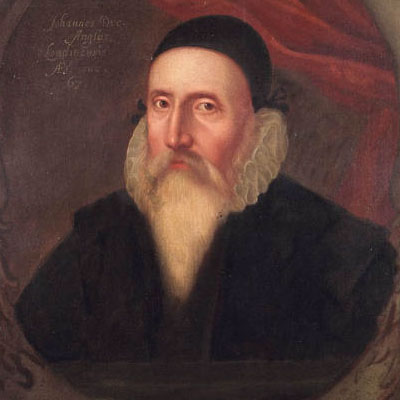
This fine fellow is Doctor John Dee. Here is a song about him.

He was a scientific advisor to Queen Elizabeth I. At that time the difference between science & high magic was often arbitrary. He cast a horoscope to choose the ideal date for her coronation then disappeared for 4 years to learn the secrets of the Cabala & to track down the mythical code book, Steganographia. This book which appeared to be a method of summoning spirits to transmit messages across vast distances was, in fact, a sophisticated code book which was used by Elizabethan English intelligence network. Dee used to sign his name 007.

Dee believed that angels could be seen in optical lenses & he employed a cunning man by the name of Edward Kelly to communicate with them in lengthy scrying sessions which Dee transcribed. Through these ‘Actions’ Dee & Kelly discovered the language of Angels, the Enochian language.

I could go on & on & on about Dee, the man who pioneered the concepts of Natural Magic, the man who saw magic as technology. I think he was brilliant.

The song is from my current album, Constant Companion, which you can hear more of if you click on this link.